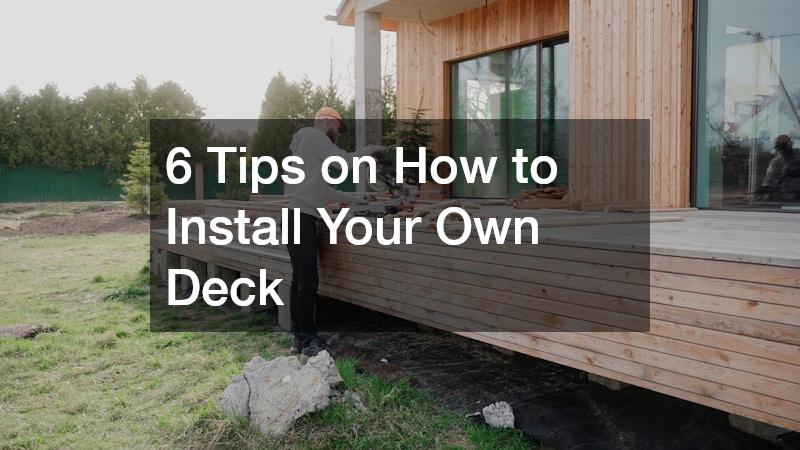

Building a deck on your own can be a rewarding project that adds beauty, functionality, and long-term value to your home. Whether you want a quiet outdoor retreat or a space for hosting friends and family, careful planning and proper technique make all the difference. Before jumping into the process, it’s important to understand what’s involved and how to work safely and efficiently. With the right tools and guidance, you can complete your deck installation confidently and enjoy a finished result you’re proud of.
1. Start With a Clear and Detailed Plan
A successful deck project begins long before you pick up any tools. Your plan should include precise measurements, the type of materials you’ll use, and the layout that best fits your yard.
Take time to consider how big the deck should be, what activities it will support, and how it will attach to your home—if at all. Also think about stairs, railings, built-in seating, or other features you may want. Check your local building codes or permit requirements to avoid costly revisions later. By mapping everything out beforehand, you set a strong foundation for an efficient deck installation that meets structural and safety standards.
2. Choose Materials That Match Your Goals and Budget
Deck materials vary widely in durability, appearance, and maintenance requirements. Pressure-treated lumber remains the most budget-friendly choice, but composite and hardwood options provide longer life and a higher-end look. Comparing your choices upfront will help you balance cost, maintenance needs, and lifespan. If you live in a region with extreme weather, consider moisture-resistant or weather-resistant options to prevent rot, warping, or splitting. Keep in mind that fasteners, joist hangers, and flashing should be weather-appropriate as well. The materials you choose play a major role in the deck’s overall strength, safety, and longevity.
3. Prepare the Ground and Set Solid Footings
A deck is only as strong as the foundation that supports it. Start by marking the outline of your deck and clearing the area of grass, rocks, and debris. Use stakes and string to outline the shape and confirm your measurements. Next comes footing placement, which is essential for weight distribution. Dig deep enough to reach below the frost line in your region, and use concrete to create stable footings for your posts. Make sure each footing is level and evenly spaced—rushing this step can create uneven boards, stress on your frame, and long-term structural issues. Once the concrete cures, attach your posts securely so the frame has a reliable base.
4. Build a Strong Frame Before Laying the Deck Boards
The frame is the skeletal structure of your deck and must be constructed with accuracy. Begin with the ledger board if your deck connects to the house. This board should be firmly mounted using approved fasteners, proper flashing, and correct spacing to prevent water intrusion. After that, assemble the outer rim joists and fill the interior with properly spaced joists using joist hangers for stability. Make sure everything is perfectly square and level—mistakes in this step will carry through the rest of the project and affect the look and feel of your finished deck. A solid frame creates a smooth, sturdy surface for the rest of your deck installation.
5. Install the Deck Boards With Proper Spacing
Deck boards are one of the most visible parts of your project, so take your time with placement. Begin with your first board along the house or outer edge and keep it perfectly straight to guide the rest of the installation. Use spacers to maintain consistent gaps between each board, allowing for natural expansion and water drainage. Choose the fastening method that best suits your material—face screws, hidden fasteners, or specialty clips for composite boards. Securing each board properly helps prevent shifting, squeaking, or cupping over time. Continue checking for alignment as you work your way across the frame.
6. Add Finishing Touches and Perform Routine Maintenance
Once all boards, stairs, and railing components are installed, walk through the entire deck to check for sharp edges, loose screws, and uneven surfaces. Sand rough spots and trim overhanging edges for a clean final appearance. If you’re using wood, apply a weather-resistant sealant or stain to help protect it from moisture and sun exposure. Maintenance doesn’t stop at installation—sweeping debris, washing the surface, and re-sealing wood every few years will help your deck stay structurally sound and visually appealing. A well-cared-for deck stays safe and functional for many years.
Installing your own deck is a hands-on project that takes planning, patience, and attention to detail. From selecting materials to building a stable foundation and applying the final touches, each step contributes to a long-lasting, attractive structure. With the right preparation and steady workmanship, your new deck can become one of the most enjoyable and functional extensions of your home.